The Promise of Canada by Charlotte Gray
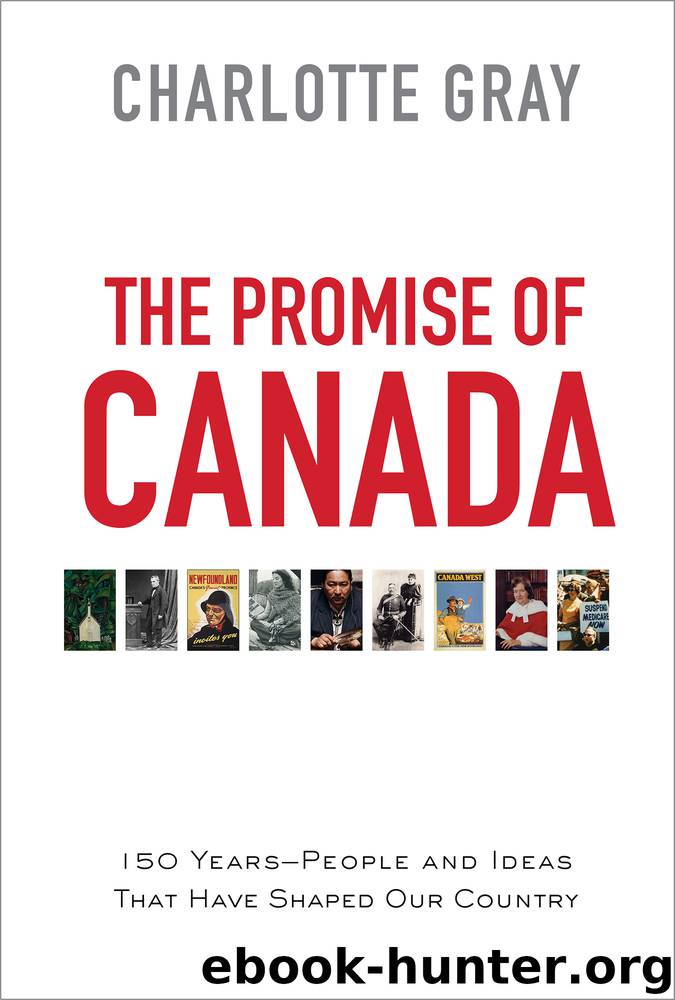
Author:Charlotte Gray
Language: eng
Format: epub
Publisher: Simon & Schuster
Other glamorous awards for Canadian fiction and non-fiction followed the Giller, including the RBC Taylor Prize for literary non-fiction, the Writers’ Trust of Canada Awards, and the Griffin Poetry Prize. Each helped create excitement around books. In the meantime, Canadian authors were also picking up international prizes: Margaret Atwood won the Arthur C. Clarke Award in 1987 and the Booker Prize (now called the Man Booker) in 2000; Jane Urquhart became the first Canadian winner of France’s prestigious Prix du Meilleur Livre Étranger in 1992; Michael Ondaatje won the Booker Prize in 1992 and Yann Martel won it ten years later; Carol Shields won the Pulitzer Prize in 1995; Timothy Findley was named Chevalier de l’Ordre des Arts et des Lettres in 1996; Lawrence Hill won the Commonwealth Prize in 2008; Alice Munro won the Nobel Prize for Literature in 2013. Canadian culture was celebrated outside Canada.
The business side of CanLit is not such a happy story. Publishers grapple with the same challenges that faced their predecessors a century ago: the audience is too small, the distances too vast, the market too flooded with foreign books. Canada’s bookstores wilt under the pressure of online sales, and global pressures on the industry rock publishing companies. Nevertheless, the literary community is firmly established. On average, about 1,500 new trade titles are published each year, including nearly 200 novels.37 These days, anybody who agrees to be a juror for one of the big awards finds herself facing an avalanche of new publications to speed-read before the deadline for the long-list and short-list announcements.
So what characterizes CanLit today? Is survival as strong a theme as it was when Atwood described it in 1972? Or do different literary themes reflect the Canadian identity in the twenty-first century?
Today’s literary culture reflects a different country. As Canadian writers and readers relinquished the colonial mentality, and as the population evolved from bicultural to multicultural, says Staines, “all directions are open to us.” Indigenous writers, including Richard Wagamese, Joseph Boyden, and Thomas King, are major prizewinners. Many of today’s literary stars were born elsewhere and set their fictions in their childhood homes: Vietnam for Kim Thúy, Germany for Dan Vyleta, Lebanon for Rawi Hage. In Staines’s opinion, “Writers here have the freedom to write about whatever, and wherever, they want.” Yann Martel, author of Life of Pi, has described Canada as “the greatest hotel on earth.” He meant it as a compliment: that this country “welcomes people from everywhere” and has no problem if immigrant writers prefer to reside here while their imaginations roam across landscapes they left behind.
Thanks to the sturdy foundation of the 1960s CanLit explosion, David Staines suggests, our literary culture today “has solidity without shape. There is no single umbrella idea.” Yet contemporary Canadian bestsellers often share particular characteristics. Atwood comments, “If you’re writing in Canada, you can’t avoid the weather.” Multigenerational families continue to loom large, although now they may be Indigenous or immigrant. Raw nature continues to be an important motif, although fragility rather than menace is the angle.
Download
This site does not store any files on its server. We only index and link to content provided by other sites. Please contact the content providers to delete copyright contents if any and email us, we'll remove relevant links or contents immediately.
Fanny Burney by Claire Harman(26605)
Empire of the Sikhs by Patwant Singh(23089)
Out of India by Michael Foss(16856)
Leonardo da Vinci by Walter Isaacson(13339)
Small Great Things by Jodi Picoult(7151)
The Six Wives Of Henry VIII (WOMEN IN HISTORY) by Fraser Antonia(5518)
The Wind in My Hair by Masih Alinejad(5100)
A Higher Loyalty: Truth, Lies, and Leadership by James Comey(4965)
The Crown by Robert Lacey(4818)
The Lonely City by Olivia Laing(4804)
Millionaire: The Philanderer, Gambler, and Duelist Who Invented Modern Finance by Janet Gleeson(4481)
The Iron Duke by The Iron Duke(4365)
Papillon (English) by Henri Charrière(4277)
Sticky Fingers by Joe Hagan(4204)
Joan of Arc by Mary Gordon(4116)
Alive: The Story of the Andes Survivors by Piers Paul Read(4036)
Stalin by Stephen Kotkin(3971)
Aleister Crowley: The Biography by Tobias Churton(3642)
Ants Among Elephants by Sujatha Gidla(3468)
